Important Sustainable Agriculture Trends

The global industry of agriculture is facing many challenges. A few of these challenges include depleting agricultural resources, degrading farmland, soil erosion, and rising input costs. Many of the industry’s challenges relate to climate change and underscore the urgency for more sustainable agriculture practices. Numerous sustainable farming practices have already started to reshape the industry on the global stage.

Precision agriculture is one of the most important industry trends when it comes to preserving resources and arable land. A few of the technologies powering sustainable, precision agriculture include drones, AI-driven planting algorithms, and advanced sensors for crop monitoring. These and other tools allow growers to closely follow crop health and assess soil conditions, in addition to mitigating water waste. Agriculture operators interested in sustainability must optimize their resource efficiency and minimize their environmental impact; to this end, precision agriculture processes are invaluable.

Regenerative agriculture has emerged as a key sustainability trend in recent years. Important regenerative agriculture techniques include data-informed crop rotation, no-till farming practices, and the use of natural fertilizers. Through regenerative agriculture, growers not only preserve soil and existing ecosystems, but renew them. Regenerative agriculture supports sustainable farming in several ways, ranging from enhanced crop yield and quality to improved carbon capture.

Leaders in the agriculture industry must find and preserve as much land as possible. With this in mind, many operators have turned to urban farming, which includes rooftop gardens to hydroponic systems in repurposed buildings. These practices not only conserve land usage but also help to bridge the cultural disconnect that has hampered the agriculture industry over the last few years, replacing that disconnect with an intimate community dedicated to sustainable farming and agriculture education.

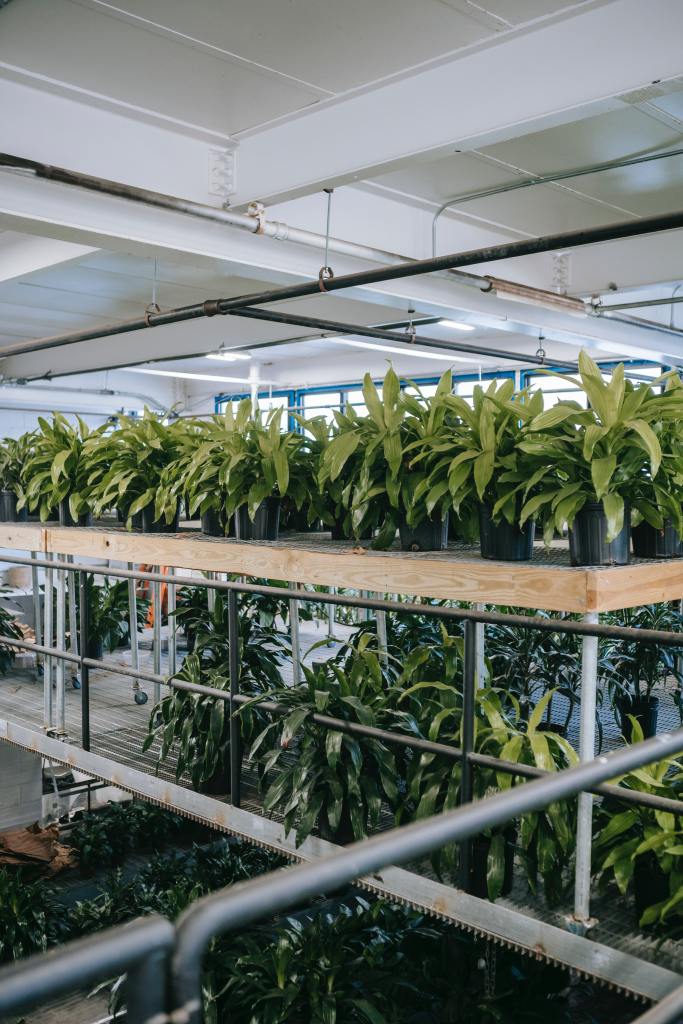
Vertical farming systems can help both urban and traditional agriculture leaders optimize crop space, especially in controlled, indoor environments. Through vertical farming, operators can eliminate the need for arable land while greatly reducing water usage.

In the name of sustainable farming, the global agriculture must embrace the latest technologies, including agricultural robotics. When used correctly, these tools can reduce waste and optimize resource usage. Similarly, Internet of Things (IoT) technologies allow farmers to connect a diversity of devices to various tools on their farms, such as linking soil sensors to irrigation systems. The real-time information provided by IoT tools can greatly enhance agricultural efficiency and minimize environmental impact.

The use of clean, renewable energy is critically important for sustainability across all industries, including agriculture. In 2024, agriculture in the United States produced more than 80 percent of the nation’s nitrous oxide emissions, per the Congressional Budget Office. With this environmental impact in mind, leaders must support increased sustainability however they can, including the integration of solar, wind, and bioenergy. The installation of solar panels is a trend of note on farms around the world.

Biostimulants represent another important sustainable solution for agriculture leaders. Biostimulants enhance plant growth through increased nutrient absorption and optimized abiotic stress tolerance. Critically, these stimulant compounds derive from completely natural resources.

Organic and agroecological farming benefits the environment, while also meeting a growing consumer need, by prioritizing the growth of chemical-free, all-organic crops. Key elements of agroecological farming include natural pest control strategies and crop diversity. Additional sustainable agriculture trends range from the development of alternative protein sources to smart water management.
Synthetic Biology Market Grows as Companies Tap into Its Innovation

A researcher from Chesterfield, Missouri, Thomas (Tom) Brutnell, PhD, has spent 25 years as a principal investigator studying genomes, genetics, and molecular biology. Dr Thomas Brutnell, the founder of Viridis Genomics Consulting, LLC, has interests in Chinese medicinal plants, plant tissue culture and transformation, and synthetic biology.

A January 2023 article in the business publication, BigThink, reported that the market for synthetic biology is poised for growth. The current global synthetic biology market was valued at $10.11 billion in 2021, with a possible growth of $32.73 billion in 2028. Further, this is based on a compounded annual growth rate of 27.1 percent between 2022 and 2028.

Synthetic biology involves redesigning or reconstructing biological entities to advance processes. The technology has been around since the early 1980s when it revolutionized insulin production by inserting a human gene into a bacterium. In essence, the technology engineers microbes as a part of biomanufacturing using enzymes, chemicals, and other bio-based materials.

Two companies are leading the way in using synthetic biology. Bayer partner, Gingko BioWorks, uses the technology to help other innovators manufacture plastic munching microbes and improve beauty products. Inscripta uses its CRISPR genome editing technology to produce chemical and bio-based products. This company’s genome technology has gone beyond simply reading DNA to writing it to accelerate biomanufacturing.

Efficiently Introducing New Traits with Genetic Engineering

Thomas “Tom” Brutnell is an industry leader in the field of agricultural biotechnology and the president of Viridis Genomics Consulting. His professional focus centers around genome (genetic) engineering, a discipline that began in the early 1980s when a research team led by Bob Fraley successfully utilized Agrobacterium tumefaciens to manipulate plant cells with the help of recombinant DNA. This led to the development of an array of genetically engineered crops, including corn and soybeans.

Genome engineering is different from traditional plant genetics, as it involves extracting DNA from one organism and introducing it into another, resulting in an organism which has specific desired traits. In order for this process to be successful, genes must first be located, cloned and characterized in order to determine their expression, and then transformed into a crop plant’s cells. Brutnell is well-versed in this cutting-edge technology and continues to provide innovative solutions for crop improvement.

Epigenetic Regulation as a Driver of Adaptive Plant Growth

A Missouri leader in the agricultural biotech sphere, Thomas Tom Brutnell consults and serves as vice president at Gateway Biotechnology, Inc. For his thesis research at Yale University, Thomas Brutnell undertook a molecular genetic analysis of transposable elements in plants and focused on the epigenetic regulation of the transposable maize Activator/Dissociation (Ac/Ds) elements.

Not limited to plants, epigenetic regulation of genes is a process where their activity is controlled by the structure of chromatin (a material made up of protein, RNA, and DNA). However, epigenetic regulation in plants differs in important ways from animals. With mammals, most tissue and organ formation occurs during embryonic development. By contrast, plants continuously generate new organs from meristems (self-sustaining stem cell populations), enabling growth. This exposes the plant germline to many more challenges over time that a typical mammalian system. For instance, the meristems of a 200 year old tree are experiencing CO2 concentrations today that are nearly double the levels when it germinated and the associated extreme environmental variation associated with climate change!

Plants cannot leave their environments and must cope with variable and unfavorable conditions. Epigenetic regulatory mechanisms enable metastable alterations in gene activity and influence gene expression patterns, allowing plants to survive and reproduce in diverse environments. Polyploidization is one key aspect that contributes to epigenetic regulation. It expands the plant’s sets of chromosomes, strengthening gene families and enabling functional specializations among duplicated genes.